Forty Years Free: The Real-World Guide to Historic Tax, MoT Exemption and Your Next Chop
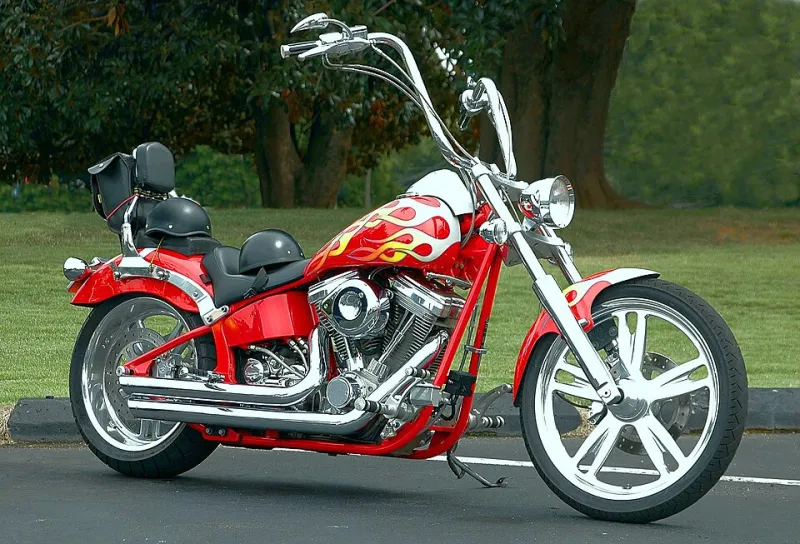
Photo: paulbr75, CC0, via Wikimedia Commons
Ask around any UK chop shed in November 2026 and you will hear the same thing: the donor pool has shifted. The rolling 40-year rule has now reached machines first registered before 1 January 1986, which means a lot of 1980s tackle — early Evo Harleys, XS650s, GSs, CBs, tired T140s — has slipped into historic tax territory. For builders, that is not just a paperwork win. It changes what is worth saving, what is worth cutting, and what an insurer will ask you to prove.
But the phrase 'MoT exempt' has become a pub myth. It is not a free pass to run a hardtail with a headlight made from a jam jar. Here is the straight-talking version.
What the rolling exemption actually gives you
The historic vehicle taxation class gives you a nil-rate tax bill. The MoT exemption removes the annual test requirement, provided the machine has not been substantially changed in the last 30 years. Those two things are related, but they are not the same. You can have a historic tax class and still fail the MoT exemption test if the build has been altered too far. You can also have an MoT-exempt bike that is absolutely not roadworthy — and that is your problem, not the DVLA's.
The exemption is not automatic. You have to declare it when you tax the vehicle, and you have to keep the V5C honest. If you are buying a project that is advertised as 'historic' and 'MoT exempt', do not take the seller's word for it. Check the V5C, check the date of first registration, and check what has been done to the frame.
The V5C shuffle: getting 'historic' on the paperwork
First, look at the V5C. The date of first registration must be right. If it says 1987 but the bike is actually a 1985 build, you need a dating certificate from the owners club before the DVLA will move the taxation class. You are asking the DVLA to change the taxation class to historic vehicle. That is the bit that gives you the nil-rate tax. The MoT exemption is a separate declaration — normally made when you tax the bike — and it only applies if the machine has not been substantially changed in the last 30 years.
If the V5C is wrong, fix it before you start cutting. A frame with no paperwork is a headache; a frame with the wrong paperwork is a migraine. Keep photographs of the frame and engine numbers, keep receipts, and keep a copy of any dating certificate. When you come to insure the finished bike, those bits of paper matter more than the paint.
The substantial alteration trap
The MoT exemption has a sting: the bike must not have been substantially changed in the last 30 years. The test is about structure and identity, not styling. A bolt-on seat, a set of apes and a new headlight will not normally trouble it. A hardtail conversion that cuts the rear frame and welds in a rigid section is exactly the sort of thing that can. Frame swaps, altered steering heads, major suspension changes and engine swaps all need looking at with a cold eye.
This is where a lot of chop builds get caught. The builder sees a rigid rear end as a styling choice. The DVSA sees a change to the chassis. If the build has crossed the line, you may still be able to tax it as historic, but the MoT exemption is not automatic — and the burden is on you to declare it honestly. If you are in any doubt, get a voluntary MoT. It is cheap insurance against a much more expensive argument later.
What insurers actually ask for
Insurers have got sharper about historic and modified bikes. Expect to be asked for photographs of all sides, frame and engine numbers, a build spec, receipts for major parts, proof of historic tax, and evidence of where the bike is kept. For a high-value chop, an agreed-value policy will usually need an independent inspection or an engineer's report. Some insurers will ask for a voluntary MoT even when the bike is exempt. Some will ask for a security device. None of them will be impressed by 'it's exempt, mate'.
Be honest about the build. If the frame has been hardtailed, say so. If the engine has been over-bored, say so. If the bike is running a modified frame with a standard V5C, expect questions. The worst time to discover an insurance problem is after a claim.
Grey areas that still bite
- Imports and rebuilt bikes: the date of first registration in the UK is not always the date of manufacture. Dating evidence matters.
- Q plates and radically altered vehicles: if the identity of the bike is in doubt, the historic route may not be the simple route.
- Continuous insurance: an exempt bike still needs to be insured if it is kept on the road, unless it is declared off the road with a SORN.
- Roadworthiness: exemption from MoT is not exemption from the law. Bald tyres, dodgy brakes and a loose rear wheel are still copper-bottomed problems.
- Selling: a buyer will want the paperwork to match the story. If the V5C says one thing and the build says another, the price will suffer.
Builder's checklist
- Check the V5C date of first registration before you buy.
- Get a dating certificate if the paperwork looks wrong.
- Photograph frame and engine numbers before any cutting.
- Decide early whether the build crosses the substantial-alteration line.
- Keep every receipt for frame work, engine work and major parts.
- Declare the MoT exemption when you tax the bike — do not assume it is automatic.
- Consider a voluntary MoT even if you are exempt.
- Tell your insurer exactly what has been changed.
The rolling 40-year rule has given the UK chop scene a bigger playground. But it has not made the paperwork disappear. Build it straight, document it properly, and the exemption is a genuine advantage. Cut corners, and it is just another way to get bitten.