Where the Rubber Meets the B-Road: Sorting Tyres for a Wide-Rear UK Chop
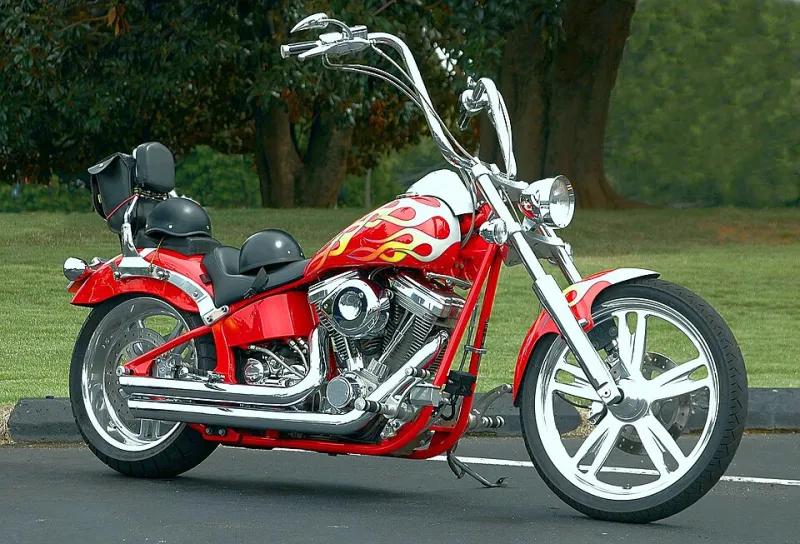
Photo: paulbr75, CC0, via Wikimedia Commons
There is a particular kind of optimism that lives in a bloke who builds a wide-rear chop in February and books a summer tour before the first weld has cooled. It is admirable. It is also how you end up on a greasy B-road in September, on a rear tyre chosen because it looked enormous in the catalogue, wondering why the front end feels like it is steering through porridge.
Fat rubber sells dreams. Wet British tarmac asks harder questions. If your chop is raked, long, heavy at the rear and running a rear hoop that looks like it came off a tractor, the tyre is not a styling accessory. It is the only part of the build actually touching the road. Treat it accordingly.
A fat rear is not a handling package
A wide rear tyre can look magnificent. It can also ruin the way a bike turns, brakes and behaves in the wet if it has been picked for width alone. The contact patch on a very wide tyre is not automatically bigger in the way people imagine. It is often broader but shorter, and the profile can make the bike want to stand up mid-corner or resist lean. On a raked chop with a skinny front, that mismatch is felt immediately.
The real issue on UK roads is water clearance. A wide tyre has to push a lot of water out of the way. If the tread pattern is shallow, the compound is hard, or the pressure is wrong, the tyre can start to float long before you are doing anything silly. You do not need a track day for that to happen. A damp, leaf-covered lane with a bit of tractor diesel is enough.
Wet grip starts with compound, not width
A lot of cheap fat tyres are built for looks and dry boulevard work. That is fine if your chop lives under a cover and only comes out for photos. It is not fine for a rider who actually uses the thing.
Look for a tyre from a known manufacturer with a compound designed for all-weather use. Silica-rich rubber is common in modern touring and sport-touring tyres because it works at lower temperatures. That matters in Britain, where a dry-looking road can be slick under the trees and where the first rain after a dry spell lifts oil and rubber residue off the surface.
Tread pattern matters too, but not in a simple 'more grooves equals more grip' way. A proper wet-weather tyre is designed to move water efficiently without squirming. A show tyre with a token groove pattern and a rock-hard compound is not a wet tyre. It is a round ornament.
Read the sidewall before you fall for the shape
Every tyre carries load and speed ratings. On a custom chop, those numbers are not paperwork decoration. A heavy steel frame, a big tank, a pillion and luggage can add up quickly. If the rear tyre is under-rated for the bike's all-up weight, you are asking it to do a job it was never built for.
Check the maximum load figure against the bike's weight and how you actually use it. A solo rider with a small tank bag is one thing. Two-up touring with a tent, tools and a weekend's worth of ale is another. The front tyre needs the right rating too. It is easy to spend all the money on the rear and forget the front is the one doing the steering and most of the braking.
Also check the size against the rim. A tyre stretched onto a rim that is too narrow will have a pinched profile and poor support. A tyre squeezed onto a rim that is too wide can wear oddly and feel vague. The wheel builder's spec sheet is more useful than a mate's opinion down the pub.
Pressures: the handbook is a starting point, not scripture
On a modified chop, the numbers in the original handbook may be irrelevant. Different tyre construction, different weight distribution and a wider rear all change the picture. Start with the tyre manufacturer's recommendation for the load, then adjust carefully.
Too hard and the tyre skips over broken tarmac and feels nervy in the wet. Too soft and it squirms, overheats and wears badly. Check pressures cold, with the bike loaded as you normally ride it. A pencil gauge is better than a forecourt airline that has been dropped twice and never calibrated. Check them weekly if the bike is used regularly. A slow puncture on a fat rear can be surprisingly easy to miss until the bike starts feeling like it is running on a flat sponge.
Tread legality and the MOT man
UK law requires motorcycle tyres to have at least 1mm of tread depth across three-quarters of the tread width and around the whole circumference. That is the legal minimum, not a target. For a wet-weather chop, replacing a tyre at 2mm or 3mm is often the sensible move, especially on a wide rear that already has less margin in standing water.
Look for cuts, bulges, cracking and embedded grit. Check the date code on the sidewall. A tyre can look healthy and still be old enough to have gone hard. If the bike has been sitting in a shed for years, budget for new rubber before you budget for paint.
The cheap fat tyre tax
A bargain rear tyre feels like a win until you are pricing a replacement wheel, a set of bars, a tank and a new jacket because the bike slid down the road. Cheap tyres are not always dangerous, but the very cheap ones often ask you to ride around their weaknesses. On a wet UK B-road, that is a miserable way to own a motorcycle.
A decent pair of tyres is one of the few upgrades you can feel every single time you ride. It is not glamorous. Nobody at a show is going to kneel down and praise your silica compound. But the rider who gets home with dry trousers and a straight bike knows the score.
Building a chop you can actually trust
If you are running a wide rear, choose a tyre that suits the bike's weight, the rim width and the kind of riding you do. Match the front sensibly. Keep the pressures honest. Replace rubber before it becomes a gamble. And ignore anyone who tells you a fat tyre is automatically a better tyre.
The best chop is not the one that looks hardest on the kerb. It is the one you will still take out when the forecast is grey, the lanes are damp and the pub is ten miles away. Get the rubber right and the rest of the build gets a fair chance.