Autojumble Alchemy: Turning Other Blokes’ Leftovers Into a Rideable UK Chop
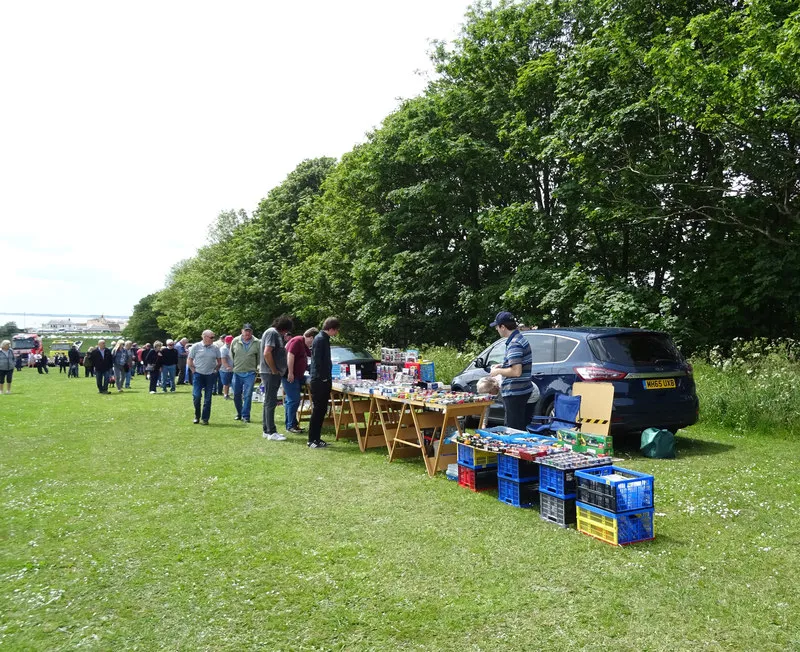
Photo: JThomas, CC BY-SA 2.0, via Wikimedia Commons
The gambit starts at dawn, in a field, with a flask
There is a particular kind of UK morning that smells of wet grass, fried onions and old engine oil. You are standing in a field near Kempton, Newark or Malvern with a bacon roll in one hand and a tape measure in the other. Around you are blokes selling boxes of bits they have owned since the Eighties, half a Triumph front end, a Sportster tank with questionable paint and a wheel that may or may not be round. This is the autojumble gambit: build a chop from other people’s leftovers, not from a shiny catalogue.
It is not the easy route. It is the route that teaches you what a part actually does, because you have to make it work. But done properly, it is one of the most satisfying ways into UK chopper culture. You are not assembling a kit. You are hunting, judging, haggling and then making a machine that carries your own fingerprints.
Set a target, not a shopping list
The mistake is arriving with a vague plan to ‘buy bits’. You will come home with a brass horn, three headlights and no front wheel. Before you go, decide what the build actually needs. Is this a hardtail frame you already own? A standard frame you are raking? A rolling project that needs a tank and forks? Write down the critical parts: tank, forks, yokes, wheels, brakes, oil tank, mudguards, controls, electrics. Then add the boring stuff: bearings, seals, cables, chain, sprockets, fasteners.
The autojumble is where you buy the odd stuff cheap. It is rarely where you buy the critical safety stuff cheap. A secondhand front brake caliper of unknown history is not a bargain if it costs you a seal kit, a piston and a fortnight of swearing. A used chain is not a bargain at any price. But a solid oil tank, a set of yokes, a headlight shell, a sissy bar, a pair of forward controls or a mudguard you can cut and reshape? That is autojumble territory.
Tanks: look past the paint and smell the inside
A chopped tank can make or break the look. It can also hide a world of pain. Before you hand over cash, take the cap off and look inside with a torch. Light surface flash rust is normal. Scaling rust, deep pitting and a tide line of old fuel are not. Shake it. If it sounds like a maraca, walk on. Ask if it has been pressure tested. If the seller says ‘it held fuel when it came off’, that is not a pressure test.
Check the mounts and tunnel. Has it been cut about? Are the threaded bosses still there? Does the tunnel clear the frame backbone you intend to use? A tank that fits a stock Sportster may not sit on your hardtail without spacers, hammer work or a new tunnel. That is fine if you can weld and you know it. It is not fine if you are buying on hope.
Paint is the last thing to judge. A rattle-can finish can hide a good tank. A lovely flame job can hide filler, dents and a leaking seam. Bring a small magnet wrapped in tape to check for filler. Bring a rag. Bring a torch. Do not rely on the third coffee to sharpen your judgement.
Forks and front ends: straight beats shiny
Forks are where autojumble bargains go to die. A set of stanchions with perfect chrome can still be bent. A set with pitted chrome can still be straight enough for a rebuild. The question is what you are prepared to pay for rechroming or replacement. In the UK, good rechroming is not cheap, and cheap rechroming is not good.
Roll the stanchions on a flat surface if the seller will let you. Look for witness marks, dents and pitting right in the travel area. Check the yokes for cracks and stripped threads. Check the axle clamps. Ask what bike they came from and what year. If the seller does not know, treat it as a set of unknown tubes and price accordingly. A complete front end with wheel, brake and mudguard can be a great buy, but only if you check that the wheel spindle, spacers and brake mounts are all there. Missing spacers are easy. Missing caliper hangers are a pain.
Wheels and hubs: round is the minimum
A wheel is not a bargain if it needs a rim, a set of spokes and a hub rebuild. Spin it. Watch the rim at the join. Check for flat spots, dents and cracks. Look at the spoke nipples. Seized nipples are common. Broken spokes are common. A hub with a cracked flange is scrap.
Bearings are cheap. Rims and spokes are not. If you are buying a wheel for the hub, fine, but know that. Check the brake drum or disc mounting face. Check the axle size against your forks or frame. A lovely wheel with the wrong axle can be machined, but that is another job. Measure before you buy. Carry a small tape measure and a set of calipers. It marks you out as someone who knows what they are doing, which helps with both judging parts and haggling.
Provenance: ask the awkward questions
UK autojumbles are not a police auction, but stolen bits do circulate. Ask where the part came from. Ask if there is a receipt. Ask if it came off a bike the seller owned. If the story changes, walk. For frames, check the frame number and the V5C. A frame with no paperwork is not impossible to use, but it is a conversation with DVLA you need to understand before you spend money. For engines, check the engine number. Matching numbers matter more on classic restorations than on chops, but a clean paper trail helps with insurance and resale.
Do not be afraid to ask for a photo of the donor bike. Most genuine sellers will have one or will happily tell you the tale. The bloke who gets aggressive when asked a simple question is not the bloke you want to buy from.
Haggling: polite, prepared, prepared to walk
UK autojumble haggling is not a shouting match. It is a quiet negotiation. Ask what they want. Offer a sensible price. Bundle things. If you are buying a tank, a set of yokes and a headlight, ask for a deal on the lot. Cash helps. End of day helps. Rain helps. A seller packing up in the drizzle is more flexible than one who has just set out his stall.
But do not haggle for sport. If the price is fair, pay it. The custom scene is small, and the bloke you mess about today may have the part you need next winter. Walk away from rusted traps, cracked castings and anything with a story that does not add up. There will be another one.
The workshop reality check
Every autojumble part comes with hidden labour. A cheap tank needs cleaning, sealing, mounting and painting. Cheap forks need seals, oil and maybe rechrome. A cheap wheel needs bearings, spokes and trueing. Budget for it. A good rule is to add 30 to 50 per cent on top of what you paid for the parts, because the bike will always need something you did not plan for.
Build coherent, not random. A chop is a system. Rake and trail, wheel sizes, brake mounts, chain line, tank clearance, seat height. Buying odd bits because they look cool is how you end up with a shed full of parts and no ride. Buy the parts that serve the build.
The payoff
When you finally roll the bike out, it will not look like a catalogue. It will look like a machine that was hunted, judged and built. There will be a tank that came from a field in Newark, forks from a breaker in the Midlands and a headlight from a shed clear-out in Wales. That is the autojumble gambit. It is messy, it is slow, and it is one of the best ways to build a UK chop.