Ridden, Not Hidden: A Daily Rider's Service Diary for a Hard-Working Chop
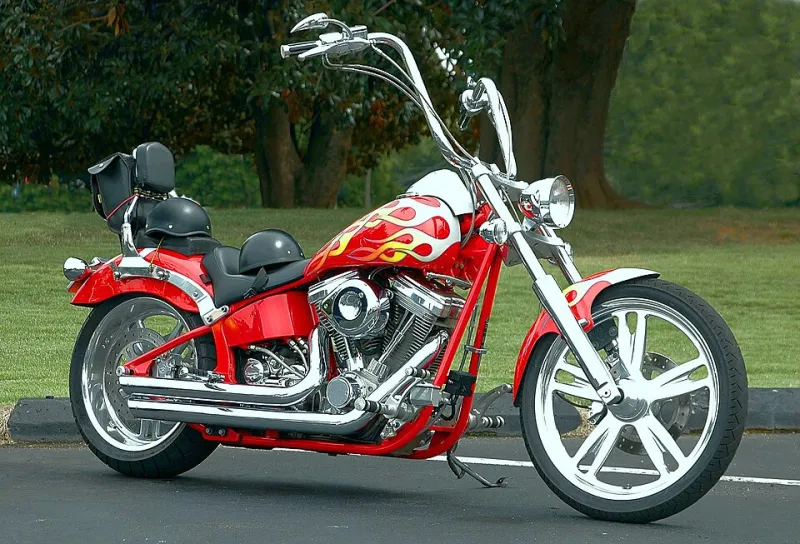
Photo: Bob P. B., CC BY 2.0, via Wikimedia Commons
There's a car park at a bike night in the Midlands where you can spot the difference in about four seconds. Two chops, same silhouette, same attitude. One gets ridden home in the rain. The other goes back on the trailer. This piece is for the first one.
The Rule, Up Front
247 Choppers isn't a name about opening hours. It's a stance: a bike that gets used.
The rule is simple. Anything that touches the road, the weather or the engine's own vibration has a lifespan measured in miles. A garage queen can hide a hooked sprocket for a decade because nobody's looking. A daily rider can't hide anything — the bike tells you, loudly, and usually at the worst possible moment on a dark A-road.
So this isn't a polishing schedule. It's a mileage-based service diary, written for the person who actually turns the key on a Tuesday in February.
Chains Don't Die, They Get Murdered
On a 500-mile-a-year show bike, the chain gets checked once in spring and forgotten. On a daily chop through a British winter, that same chain cops salt, grit, standing water and a couple of hundred heat cycles a month.
Realistic expectations: adjust every 400 to 500 miles, inspect for tight links and shark-finned sprocket teeth every 1,000, and accept that a decent 530 setup is finished somewhere between 8,000 and 12,000 miles depending on how religious you are with the lube. If the rear sprocket teeth are curling like a bad haircut, the chain was dead 500 miles back and you just hadn't noticed.
Buy a proper chain tool. Learn to pull the wheel out on your own driveway. Learn to check alignment with a straight edge rather than trusting the snail cams. Chain and sprockets are the cheapest drivetrain you'll ever fit — right up until a snapped chain takes out your cases.
Vibration Is a Slow Thief
Rigid frames, hardtail rear ends, solid-mounted motors and a big twin doing 70mph for an hour: that's not a bike, that's a paint shaker with a seat.
Every 1,000 miles, walk the whole machine with a spanner. Not a glance — an actual walk-around. Blue threadlock isn't a bodge, it's basic respect for a machine that's trying to disassemble itself at speed.
The usual casualties: number plate and bracket, reg holder bolts, mirror stems, wiring looms chafing at the headstock, exhaust hangers, battery terminals, and anything that was nipped up by feel rather than by torque wrench. Then there's the rider — numb fingers, tingling palms, that dull ache in the wrists after 40 miles. Bar-end weights, rubber-mounted pegs and a properly packed seat aren't softness. They're maintenance.
Water Always Wins
Salt doesn't care how much you spent on the paint. It gets into the swingarm bearings, the steering head, the brake caliper pistons, the electrical connectors behind the side panel and the threads of every bolt you didn't grease on assembly.
Sort a protection plan before the gritters wake up. A decent anti-corrosion spray worked into the frame, the underside, the fork lowers and the wheel spindle area will save you a fortnight of swearing in March. Wash with cold water rather than hot — hot water drives salt deeper into seams. Rinse the underside properly. Give the bike two proper washes a month through winter minimum, and re-apply protection after each one.
If you're running a chain final drive, remember the chain gets the worst of it. Clean, dry, lube — every week in the wet months.
Tyres, Brakes and the Things You Can't Postpone
Chop rear tyres are usually wide, often hard-compounded, and frequently run at pressures the builder chose for looks rather than load. Check them weekly, not monthly. On a daily rider you'll be lucky to see 4,000 to 6,000 miles from a rear, and a squared-off tyre on a wide rim makes a lazy steering bike even lazier.
Brake fluid every two years regardless of mileage — it's hygroscopic, it absorbs water, and one hot descent of a Welsh valley road will tell you exactly what that means. Pads: check every 1,000 miles. On a bike with a single front disc and an honest amount of weight, pad life disappears faster than you'd expect.
Don't forget the boring bits: fork oil, steering head bearing feel, wheel bearing play, clutch adjustment, primary oil on a belt or chain primary, gearbox oil, and a look at the brake lines for cracking if they've been on there a decade.
A Schedule That Fits a Working Week
- Weekly (roughly 150-200 miles): chain lube and tension check, tyre pressures, quick spanner pass on the front end, lights, brake lever feel, tyre condition.
- Monthly (roughly 800 miles): full fastener torque pass, chain adjustment and alignment, cable lubrication, brake pad inspection, wash and re-protect.
- Every 3,000 miles: engine and primary oil depending on the build, clutch adjustment, wheel bearing feel, exhaust mount check.
- Every 6,000 miles: fork oil if you're being honest with yourself, steering head bearing check, brake fluid on the two-year clock, full electrical connector inspection.
- Annually, before the first grit: strip the bodywork, treat every bearing and connector, check the loom for chafe, and replace anything that's been living on borrowed time.
The Winter Honesty Test
The chop that gets abandoned in November is the one that costs you £800 in March. There is no version of British winter where leaving a bike standing in a damp shed improves it. Condensation forms inside the cases. Fuel goes stale. Battery drops. Brake calipers seize. Seals dry and weep.
Ride it, or at minimum run it and move it. Ten miles a fortnight keeps more alive than a battery tender ever will.
Why Bother
Because a chop that's ridden is a chop that's alive. The dents, the scuffs on the cases, the blued header and the worn grip rubber — that's not damage, that's a ledger of where the bike has been and what it survived. The bloke with the cleanest bike at the show isn't necessarily the best builder. He might just be the one who never went anywhere.
Ride hard. Build harder. Service it before it asks.