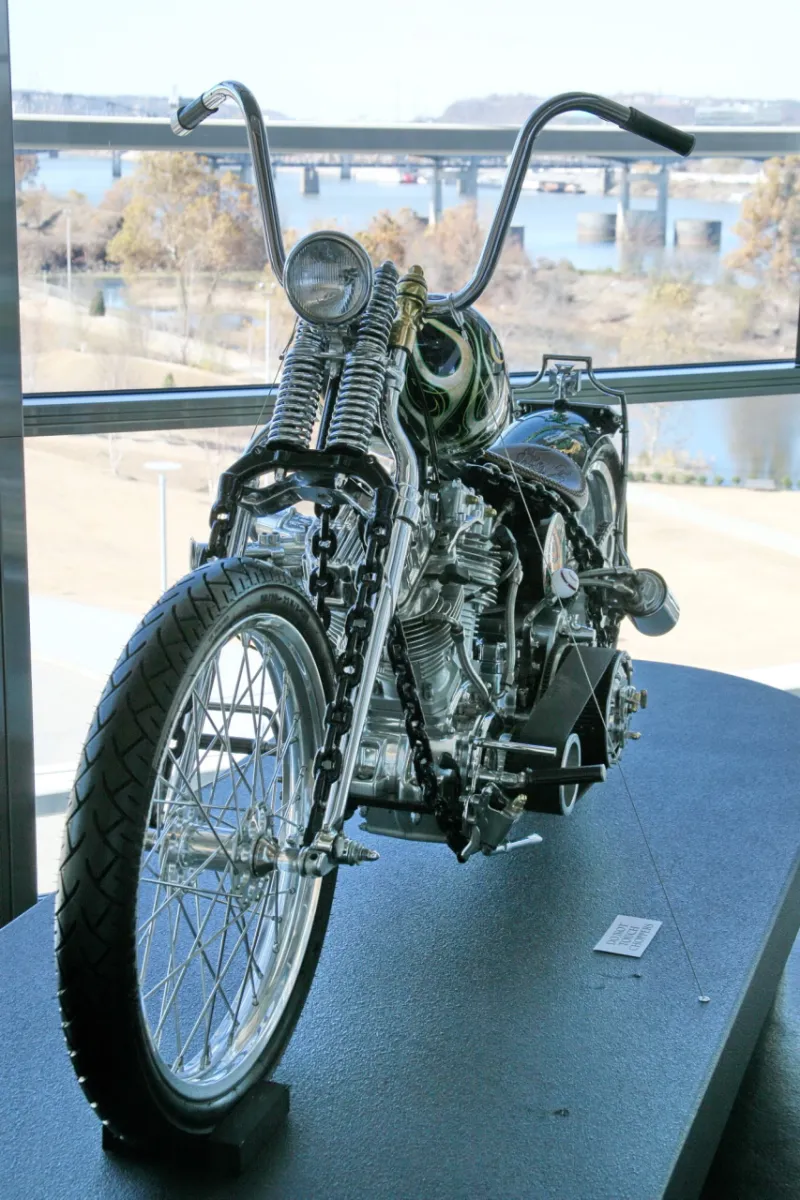
Look Harder Than You Love It: Vetting a Used UK Chop Before the Cash Leaves Your Pocket
Photo: Unknown, Public domain, via Wikimedia Commons
Buying a used chop is not like buying a used hatchback. A hatchback hides its sins behind sensible plastics. A chop hides them behind attitude, fresh paint and a seller who says it rides lovely. That is exactly why you need to look harder than you love it. Twenty minutes with a torch, a rag and a cold, suspicious eye can save you thousands—and a winter of regret in the shed.
First Rule: Slow Down, Sunshine
Meet in daylight. Not a pub car park at dusk, not a lay-by with the engine already warm. You want the bike cold, dry and in decent light. Bring a small torch, an old rag, a notebook and your phone for photos. If the seller gets twitchy about a proper look, that is information. File it away.
Ask them not to start it before you arrive. A cold start tells you more than a dozen warm revs. Does it catch quickly? Is there a rattle, a whine, a puff of blue smoke or a carb cough that sounds like a plea for help? Let it idle. Listen. Then ask yourself whether the seller is proud of that noise or talking over it.
The Frame Tells the Truth
Paint is a liar. Frame welds are not. Start at the headstock and work back. Look for pigeon-poo welds, cracks, fresh underseal slapped over old repairs and grinding marks around the engine mounts. On a hardtail conversion, the rear section deserves a hard stare—especially the junction where the new tubes meet the original frame. If it looks like it was welded by a man in a hurry with a dying welder, walk.
Check the swingarm pivot area on softails and the axle plates on rigids. Look for elongated holes, crushed tubes and spacers made from old sockets. A shed-built chop can be brilliant, but it should look like someone thought about it. Fresh powdercoat over a cracked weld is not a cosmetic issue. It is a warning.
Rake, Forks and Whether It Tracks Straight
A raked front end can look mean and ride meaner if the geometry is off. Stand in front of the bike and sight down the forks. Are the tubes parallel? Is the wheel centred? Are the yokes straight ahead with the bars? Grab the front wheel and rock it—any clunk from the head bearings needs investigating. Check the fork seals for weeping oil and the stanchions for pitting. Chrome that looks like a ploughed field will eat seals and your patience.
Look at the wheel spacers. Are they proper machined items or a stack of washers? Does the brake caliper line up with the disc without half a mile of shimming? If the front end looks like it was assembled from three different bikes and a prayer, assume the handling is just as creative. A chop does not have to be a show pony, but it does have to go where you point it.
Numbers, V5C and the Paper Trail
This is the bit people skip because they are excited. Do not skip it. Check the frame number against the V5C. Check the engine number too, where it is visible. Stamps should be clean and original, not half ground away and restamped in a shed. If the numbers do not match the logbook, ask why. If the answer involves a lot of hand-waving and a mate who knows a bloke, be very careful.
Look at the V5C itself. Does the make, model and colour make sense for what is sitting in front of you? Is it registered as a motorcycle, or something stranger? Has it been off the road for years without a SORN? Are there old MoT advisories lurking online that mention corrosion, brakes or steering? A folder of paperwork is worth more than a folder of compliments. Receipts for frame work, engine work and major parts separate a genuine shed build from a polished death trap.
Wiring: Follow the Loom, Not the Vibe
A chop often has the electrical system of a Victorian ghost story. Look under the tank and behind the side panels. If you find a nest of scotch locks, twisted wires and electrical tape holding hands, expect trouble. Check that the lights, horn, brake light and indicators work as they should. Wiggle the loom near the steering head while the bike is running—if the lights flicker or the engine stumbles, the wiring is telling you something.
Look for fuses and relays. A bike with no fuses is not minimalist; it is a fire waiting for a date. Check the battery box and earth straps. Corrosion around the terminals is normal on a UK bike, but a melted connector or a wire trapped against the frame is not. If the seller says the wiring is temporary, believe them. Temporary has a habit of becoming permanent at the worst possible moment.
Brakes, Tyres and the Bits That Keep You Alive
Brakes are not the place for chopper romance. Check the discs for scoring, the pads for meat and the fluid for anything other than swamp water. Squeeze the lever—does it feel firm or spongy? Look at the lines. Braided lines are a good sign; cracked rubber lines are not. On drum brakes, check the cable action and the arm movement. If the rear brake pedal travels to the stop before doing anything, budget for a rebuild.
Tyres tell you how the bike has been kept. Check the date codes, not just the tread. Look for cracking in the sidewalls and uneven wear that suggests a bent wheel or bad alignment. UK salt and damp are cruel to chrome, aluminium and fasteners. A bit of patina is fine. A front end held together by rust and hope is not.
The Questions That Make a Seller Go Quiet
Ask who built it. Ask what it is based on. Ask when it was last ridden properly, not just moved around the yard. Ask what they would fix before riding it to Scotland tomorrow. Ask if it has ever been dropped, and watch the eyes rather than the mouth. Ask for the receipts. Ask why they are selling. A straight seller will talk. A chancer will give you a story with no edges.
If the seller goes quiet when you mention frame numbers, welding certificates or receipts, that silence is worth more than any polished tank. You are not there to make a friend. You are there to avoid buying someone else's abandoned project with a fresh coat of paint.
When to Walk and When to Deal
Walk away from cracked welds, mismatched numbers, wiring that looks like spaghetti and a front end that refuses to line up. Walk away if the seller will not let you start it cold or refuses a sensible inspection. Walk away if the paperwork feels like a riddle.
But if the frame is sound, the numbers line up, the brakes are honest and the receipts tell a coherent story, you might have found a proper bike. A used chop will never be perfect. It just needs to be honest. Look hard, ask awkward questions and keep your cash in your pocket until the bike earns it.