Weathered, Not Wrecked: Keeping Patina Honest on a UK Chop
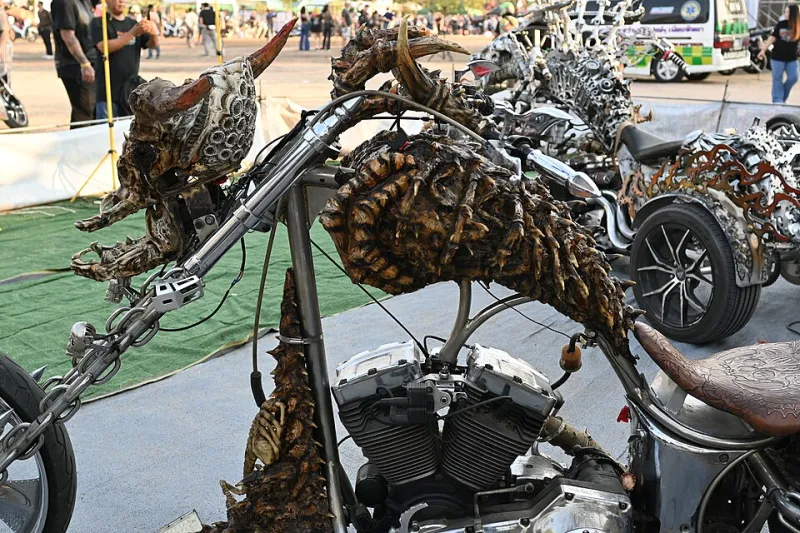
Photo: PattayaPatrol, CC BY-SA 4.0, via Wikimedia Commons
There’s a certain kind of bloke who won’t ride a bike until the paint is perfect. He’ll trailer it to a show, wipe it with a microfibre cloth, and spend the afternoon telling anyone who’ll listen about the two-pack lacquer. Then there’s the other sort: the rider who pulls up on a chop with a tank that’s been sun-bleached, a front mudguard that’s lost half its chrome, and a set of cases that look like they’ve been dragged through a hedge backwards. Nine times out of ten, the second bike has more soul. It’s also the one that’s actually been used.
Patina is a funny thing. On a vintage tractor or a leather jacket, everyone calls it character. On a motorcycle, some people see nothing but neglect. The truth sits somewhere in the middle. A British chop that’s spent years on real roads — A-roads, B-roads, the occasional farm track — will pick up scars. The question isn’t whether you should keep them. It’s whether you can tell the difference between a story and a warning.
The Difference Between a Story and a Warning
Surface rust is honesty. It’s the thin bloom that appears on a bare-steel tank after a damp weekend, or the orange dust that collects around a bolt head. You can usually wipe it away with a rag and a bit of oil, and underneath the metal is still solid. Structural rot is a different animal. It’s the rust that has eaten into the thickness of the steel, the kind that leaves pitting deep enough to catch a fingernail, or the flakes that come away in sheets when you tap the frame with a screwdriver handle.
On a chop, the usual suspects are the lower frame rails, the swingarm or hardtail section, the bottom of the tank, and any place where water sits. Mudguards are another one. A steel guard can look fine from three feet away and be paper-thin around the mounting holes. The same goes for fasteners. A rusty bolt head is not automatically a problem, but a fastener that’s lost its shoulders to corrosion is. If a spanner feels loose on it, the bolt is done.
Where Patina Earns Its Keep
Tins are the easy win. A tank with faded paint, a few dents, and a bit of surface rust around the filler neck can look brilliant — especially on a chop that’s built to be ridden rather than polished. The same goes for side panels, oil tanks, and rear fenders. A clearcoat over honest patina can lock the look in without making it look fake, but it has to be done right. Rattle-can lacquer over damp rust will just trap moisture and accelerate the rot. Clean it, dry it, treat it, then seal it.
Fasteners are trickier. A set of dull, oxidised bolts can suit a weathered build, but only if they’re the right grade and they’re torqued properly. Stainless that’s gone dull is fine. Zinc-plated hardware that’s furred up with white corrosion is not. Replace the important ones — brake caliper bolts, axle nuts, yoke pinch bolts — and leave the cosmetic stuff alone if you like the look.
The British Winter Is the Real Test
Salt is the enemy. Not rain, not mud, not even the occasional puddle. Salt gets into seams, sits in the bottom of a mudguard, and eats steel from the inside out. If you’re riding a patina-covered chop through a British winter, you need a plan. ACF-50 or a decent wax coating on the frame and tins will slow the rot down, but it won’t stop it if you leave the bike covered in road grime for three months. Rinse it with cold water — not a pressure washer — and dry it properly. A pressure washer will force water into places you can’t dry, and that’s how a solid frame becomes a scabby one.
Storage matters just as much. A damp shed is worse than no shed at all. If the bike is going to sit, get it off the ground, keep air moving around it, and don’t tuck it under a breathable cover that’s actually a plastic sheet. Condensation is the quiet killer. A bit of ventilation and a cheap dehumidifier will do more for your patina than any fancy oil.
The Line You Don’t Cross
Here’s where the romantic view of rust has to meet the MoT reality. A frame with deep pitting around a weld is not patina. It’s a failure waiting to happen. The same goes for fork legs with rust in the seal area, handlebar clamps with corrosion under the chrome, and any structural part that feels light or sounds hollow when you tap it. If you can push a screwdriver through it, it’s not a story. It’s scrap.
Tanks deserve their own rule. A bit of rust in the filler neck is one thing. A tank that’s weeping at the seams, or has a tide mark of rust inside that’s blocking the tap, is another. Fuel systems don’t forgive neglect. If the inside of the tank looks like the bottom of a canal, get it cleaned and lined — or replace it.
Preserve the Look Without Pickling It
You don’t need to lacquer everything. A wipe-down with an oily rag after a wet ride will keep bare metal from blooming. A bit of beeswax on painted panels will hold off the damp. For frames, a light coat of ACF-50 in the autumn and a rinse in the spring is often enough. The trick is to keep the surface dry and stable without making the bike look like it’s been dipped in grease.
And don’t be afraid to replace the odd part. A new set of fasteners on a weathered bike doesn’t ruin the look — it shows you care about the bits that matter. The same goes for brake lines, cables, and anything safety-critical. Patina is a finish, not an excuse.
The Shed’s Verdict
A British chop should look like it’s been places. A bit of rust, a few dents, and a paint job that’s seen better days can be more honest than any show-winning finish. But honesty has a limit. Know the difference between a scar and a fracture, keep the salt off it, and don’t let the romance of patina talk you out of a new frame tube when the old one is ready to let go. Ride hard, build harder — but check the steel first.