No Drive, No Drama: Chopping a Bike From a Terraced-Street Frontage
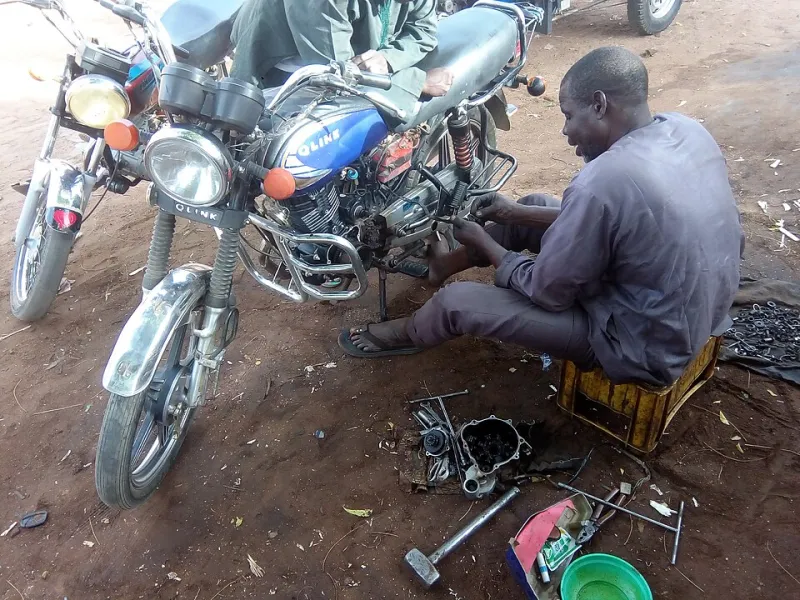
Photo: Abba Abdullahi, CC BY-SA 4.0, via Wikimedia Commons
There’s a romantic idea that every custom build happens in a cathedral of a workshop, with a two-post lift, a compressor the size of a fridge and a radio permanently tuned to a station that only plays ZZ Top. The reality for plenty of UK riders is a front garden the size of a bath mat, a shared alley that smells of damp bins, or a mate’s yard you can use on alternate Sundays. That doesn’t mean the chop doesn’t happen. It just means the workshop has to be portable, polite and tougher than the weather.
First, Make Peace With the Pavement
A terraced-street build starts with an honest look at what you’ve actually got. If you’ve got a frontage, that’s your bench. If you’ve got a shared alley, that’s your bench with a right-of-way attached. If you’ve got a borrowed corner of someone else’s yard, that’s your bench with a clock on it.
Before the first socket gets dropped, check what you’re allowed to do. Council rules vary, tenancy agreements vary more, and a neighbour with a smartphone can turn a quiet Sunday spanner session into a paperwork exercise. You don’t need a permit to change a brake caliper, but you do need to keep the pavement clear, avoid blocking fire exits and resist the urge to turn the whole street into an extension of your tool chest. A cheap groundsheet, a drip tray and a folding table will do more for community relations than a thousand apologetic nods.
The Tool Kit That Fits a Doorway
The trick is to work in layers. Keep a core kit that lives in one rolling box: sockets, spanners, Allen keys, screwdrivers, pliers, a torque wrench and a decent torch. Then keep a second layer for the job at hand. If you’re pulling a front end apart, the angle grinder and the big hammer can stay indoors until they’re needed. If you’re rebuilding carbs, the whole box can come out, but it goes back in one trip.
Battery tools have changed the game for pavement spannering. A decent impact driver and a work light mean you’re not trailing an extension lead through the hallway and hoping the RCD doesn’t trip when the kettle goes on. If you do need mains power, use an RCD adaptor and keep the lead off the walking route. Label your boxes, keep a roll of zip ties and a bag of rags in the lid, and accept that a trolley jack is worth its weight in gold when you’re working on concrete that isn’t quite level.
Weather Is the Enemy (and the Council Is Its Solicitor)
A temporary build lives and dies by the forecast. A breathable bike cover is better than a tarpaulin that traps condensation against fresh paint. A pop-up gazebo can work, but only if it’s weighted properly and you’ve checked you’re not creating a wind tunnel for the whole terrace. In 2026, a decent battery work light and a waterproof phone case are as important as a 12mm spanner.
Work in short, focused sessions. Twenty minutes of progress beats two hours of fighting a shower and losing. Keep electrical tools indoors until the last minute. If you’re stripping the bike down, bag and label fixings as you go, because a dropped nut on a pavement has a special talent for finding the only drain within fifty yards. And don’t leave the bike half-covered for days on end. A cover that flaps in the wind will rub paint and annoy the neighbours in equal measure.
Neighbours: The Unofficial MoT
You can have the best build in Britain, but if the street hates you, every session feels like a siege. Introduce yourself before the grinder comes out. Explain what you’re doing, how long it’s likely to take, and that you’re not running a motorcycle shop from the kerb. If you’re going to make noise, do it at civilised hours. If you’re going to run an engine, make sure the baffles are in and the exhaust isn’t pointing at someone’s window.
Keep the patch tidy. Sweep up swarf, wipe up oil, and don’t leave a stack of old parts leaning against the wheelie bin. A tidy frontage says “careful builder”, not “scrapyard with a V5C”. If a neighbour complains, listen first and argue second. Sometimes a moved bin and a quieter approach is all it takes.
Security When Your Workshop Is a Public Footpath
A bike sitting on a terraced street is a bike on display. Use a cover that doesn’t advertise the make, chain it to something solid if you can, and lock your tools away every night. If you’ve got a front garden, a ground anchor set in concrete is worth the effort. If you haven’t, a heavy chain through the frame and a motion alarm that fits under the seat will buy you some peace of mind.
Don’t leave a shiny new tank or a set of carbs sitting out overnight. Take photographs of the build as it progresses, and keep the really valuable bits indoors. The street is your workshop, but it doesn’t have to be your showroom.
The Rituals That Keep It Sane
Pavement spannering works best when it’s broken into rituals. A cup of tea before the cover comes off. A clipboard with the job list so you don’t wander off into a dozen half-finished tasks. A final tidy-up before the light goes, even if you’re mid-job. The bike goes back under cover, the tools go back in the box, and the street goes back to looking like a street.
There’s a certain satisfaction to building a chop in the open air, with the sound of the neighbours’ telly and the smell of someone’s Sunday roast drifting past. It’s not glamorous, but it’s real. And when the bike finally fires up and rolls away from the kerb, you’ll know exactly how much grit went into it. That’s the 247 Choppers way — ride hard, build harder, even if the build happens between the wheelie bin and the front door.