Reach High, Tread Careful: Fitting Ape Hangers to a British Chop
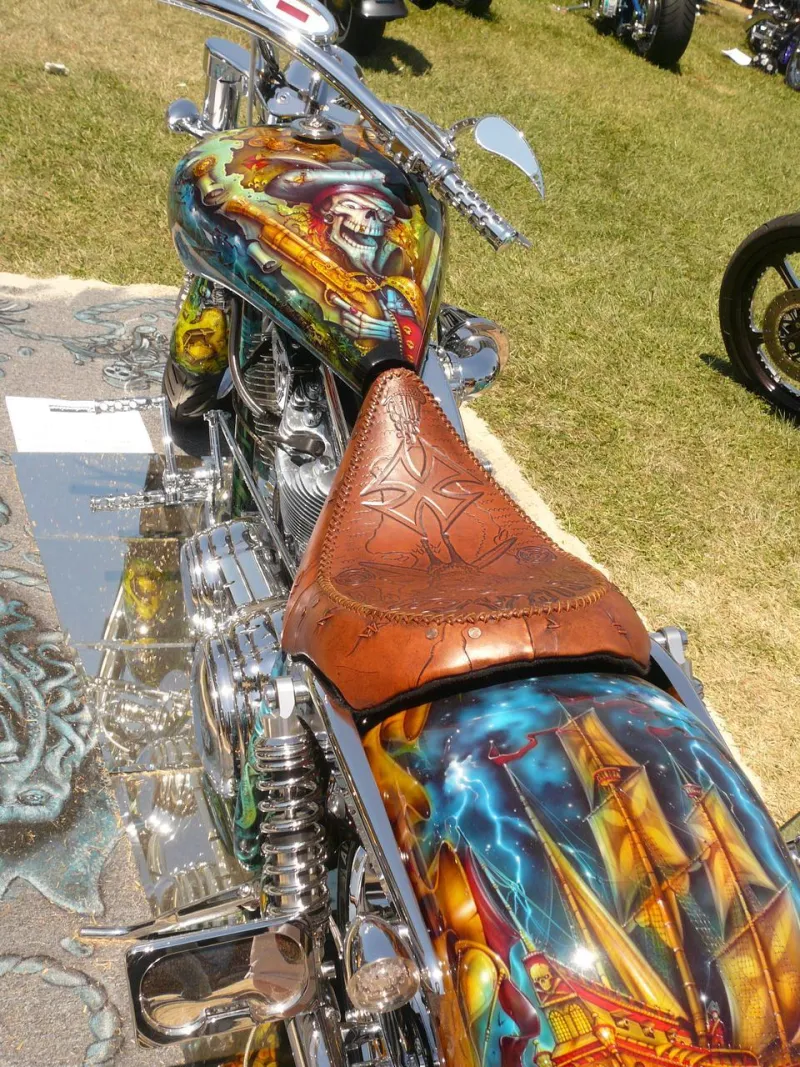
Photo: Ashi Fachler from San Diego, CC BY 2.0, via Wikimedia Commons
There’s a moment in every shed build when the bars go on and the bike finally looks like the picture in your head. Ape hangers do that better than almost anything else. They también do something else: they change how the whole machine steers, stops and tires you out. On a British chop, where the lanes are narrow, the tarmac is patchy and the weather has opinions, tall bars are a commitment. This is the shed-level guide to making that commitment work.
The Law Isn’t a Height Limit — It’s a Safety Test
Start with the thing that causes the most pub arguments: there is no magic millimetre figure in UK law that says your bars are too tall. The MOT manual doesn’t send testers out with a step ladder. What it does require is that the handlebars are secure, the steering moves freely from lock to lock, the controls work, the throttle closes by itself and nothing fouls or traps. If your bars flex in the clamps, if the front brake line goes tight on full lock, or if the throttle sticks because a cable is routed like a fiddler’s elbow, you’ve built an MOT failure — no matter how good it looks.
For a shed-built chop that’s going through MSVA or IVA as a new or radically altered machine, the goalposts move again. Don’t assume an MOT pass covers every box. Build to the spec, keep your receipts and photograph the routing before the tank goes on. The tester isn’t there to ruin your style; he’s there to check that the style hasn’t ruined the steering.
Clearance Is King: Tank, Locks and Your Knees
Before you buy the tallest bars in the catalogue, mock them up. Clamp them in place without cables and turn the steering to both locks. Watch the tank, the headlight shell, the fork shrouds and your own knuckles. Bars that kiss the tank at full lock will fail an MOT and dent your paint. Bars that trap your hand between the lever and the tank are worse.
Width matters as much as height. A wide set of apes gives you leverage, but it also turns filtering on the A40 into a game of chicken with Transit mirrors. On tight Kent lanes or a rutted Peak District B-road, a narrower bar can be the smarter chop. Check your knees at full lock too. Tall bars often pull your weight back, and if the seat and pegs don’t match, you’ll feel it in your lower back before you’ve reached the end of the street.
Cables, Lines and the Full-Lock Test
This is where most home builds come unstuck. The throttle must snap shut with the bars turned fully left and fully right. Route the cables in gentle curves, not tight loops. If the outer cable is kinked, the inner will drag. The clutch cable should pull smoothly through the full range of steering, with enough slack to avoid tugging the actuator.
The front brake line is the one to take seriously. Fit a braided line made to length — not a standard line stretched like a guitar string. Check the banjo angles at the master cylinder and caliper, and make sure the line doesn’t rub on the fork leg or trap against the frame at full lock. Taller bars can leave the master cylinder reservoir at an awkward angle, which makes bleeding a pain. Bleed it properly, including the banjo bolt if needed, and pump the lever until it’s firm before you go anywhere.
Wiring is the quiet killer. Don’t yank the switchgear loom until it reaches. Extend it properly with solder and heat-shrink, sleeve the lot and leave a service loop at the steering head. Secure it with P-clips or proper cable ties that don’t crush the insulation. Then test every switch: indicators, horn, kill switch, lights, brake light. A chop that looks the business but can’t flash a indicator is just a sculpture.
Comfort Is Geometry, Not Altitude
Ape hangers are sold on height, but comfort comes from angle. Bars that are tall and narrow can put your wrists in a weird twist and load your tailbone. Bars that are tall and wide can ache your shoulders. Sit on the bike with the bars fitted, feet on the pegs, and let your hands fall naturally onto the grips. If you have to reach up and forward, the pullback is wrong. If your elbows are locked, the height is wrong.
Budget for the bits you didn’t plan: risers, a different seat, maybe moved pegs. The comfort you didn’t budget for is the physio appointment after a 200-mile day. A hardtail with high bars can be a brilliant thing, but only if the contact points agree with each other.
How Tall Bars Change the Ride
High bars give leverage. That’s great for wrestling a heavy front end at walking pace and terrible for a crosswind on the M6. They act like a sail, and lorries push you around more than you expect. On a wet B-road, the front end can feel light because your weight has shifted rearward. Brake earlier, steer with your eyes and don’t grab a handful of front brake mid-corner.
Slow-speed turns need practice. The bars may give you more steering lock, but they also amplify every twitch. Find an empty car park and ride figure-eights until you trust the bike. Then check every clamp bolt again. Tall bars put more leverage through the risers and top yoke, so torque them to spec and re-check after the first fifty miles.
Mirrors, Indicators and the Legal Trim
A tall bar can put your mirrors behind your elbows. You need at least one rear-view mirror that actually shows you the road behind, and it must be secure. Bar-end mirrors can work, but check they don’t make the bike wider than you think when filtering. Indicators, if fitted, must be visible and working. High bars often mean relocating them, so don’t bury them behind levers or tuck them where a following car can’t see.
The MOT Bay Reality Check
The tester will rock the bars, turn the steering lock to lock, work the throttle and brakes, and look for fouling. He won’t measure your style. He will fail bars that are insecure, steering that binds, a throttle that doesn’t return, or a brake line that’s stretched or kinked. Clean the bike, route everything properly and leave the standard exhaust alone for the day.
One last thing: tell your insurer about the bars. A modified chop with undeclared handlebars is a conversation you don’t want after a claim. A five-minute phone call beats a void policy every time.
Ape hangers are worth the hassle when they’re set up right. Measure twice, mock up once, and test the full lock before the paint goes on. That’s the 247 Choppers way: ride hard, build harder, and don’t let the bars ride you.